
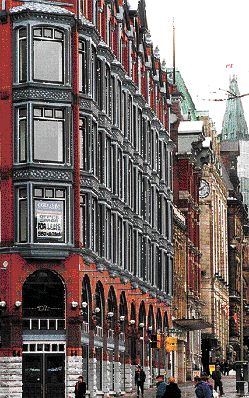
Clarity for the public
Entrances that read, wayfinding that makes sense, and spaces where people know where to go without asking. That sounds basic. It is also the thing users notice first.
Schools, libraries and public facilities carry a different kind of responsibility. They belong to everyone, they are used for decades, and they have to work on the busiest day of the year, not just on opening day. We design them with that in mind.
Talk about a project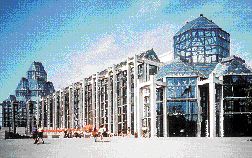
Public buildings live in the open. They are judged by the people who walk through them, by the staff who run them, and by the budget that has to cover the next twenty years of upkeep. Our job is to hold all three in view at once.
Entrances that read, wayfinding that makes sense, and spaces where people know where to go without asking. That sounds basic. It is also the thing users notice first.
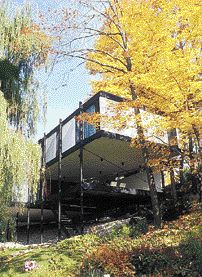
Materials that age well, systems that can be serviced, and details that survive a Canadian winter. A public building should look serious in year one and still look serious in year thirty.
Public money deserves a clear return. We work with clients on life cycle cost, not just the capital number, so the building does not become a burden the moment it opens.
We take on institutional work across the full arc, from early feasibility through to the final site review. Some clients come to us with a site and a rough budget. Others come with a building already in use and a problem to solve. Both are familiar ground.
The work often starts before there is a drawing. A client needs to know whether a site can carry the program, whether an existing building can be adapted, or whether a phased approach is the only realistic path. We run those questions early, in plain language, before anyone commits to a direction.
Once the project moves into design, we keep the same small team on it through construction. The people who drew the building are the people who answer the phone when a detail needs a decision on site.
An institutional building is rarely alone. It sits in a neighbourhood, it shares a block, and it sets a tone for whatever comes next to it. We pay attention to that context, whether the neighbours are heritage structures or newer development.
Ottawa has a particular character. It is a capital city with a small town feel, and public buildings here carry a weight that is hard to describe to someone who has not worked in it. We have been part of that fabric for a long time, and we design with an awareness of what the city expects from its civic architecture.
That does not mean copying the past. It means understanding what is worth keeping and what a new building can add without shouting over its neighbours.
Bring us the site, the program and the constraints. We will tell you what is realistic, what needs more study, and how we would approach the work from day one.
Start a conversation