
Architects
Licensed professionals who lead projects, coordinate consultants and carry the professional responsibility for the work. They are involved at every stage, not only at the start.
We are a group of architects and designers who have chosen to work at a scale where everyone knows every project. That is not a slogan. It is a practical decision about how we want to practise, and it shapes who we hire and how we run the office.
Get in touch
The team is deliberately compact. A project is handled by a small group from the first meeting to the final site review, and the people who draw the building are the people who answer questions about it later.
Licensed professionals who lead projects, coordinate consultants and carry the professional responsibility for the work. They are involved at every stage, not only at the start.

The people who turn a concept into buildable drawings. They know the code, the materials and the details, and they are often the first to spot a problem before it reaches the site.
The administrative and coordination work that keeps projects moving: schedules, submissions, document control, and the quiet tasks that make the rest possible.
Skills can be taught. Habits are harder. When we hire, we pay attention to how someone thinks about a problem, how they handle a correction, and whether they are genuinely curious about buildings.
| Quality | What it looks like in practice |
|---|---|
| Clarity | Drawings and emails that a contractor can act on without calling |
| Curiosity | Asking why a detail exists before changing it |
| Reliability | Doing what was said, when it was said, without reminders |
| Humility | Accepting a better idea from a colleague or a consultant |
| Care | Treating a small residential job with the same attention as a public building |
The studio is small enough that a new person is visible from the first week. That can be demanding, and it is also an opportunity. There is no layer between a junior designer and the person making decisions, which means learning happens fast.
We are not for everyone. People who want to specialise narrowly, or who prefer to work on one part of a project and hand it off, tend to be happier elsewhere. People who like seeing a building through from first sketch to final review tend to stay.
Small studios live or die on how they share information. We have learned to keep that simple.
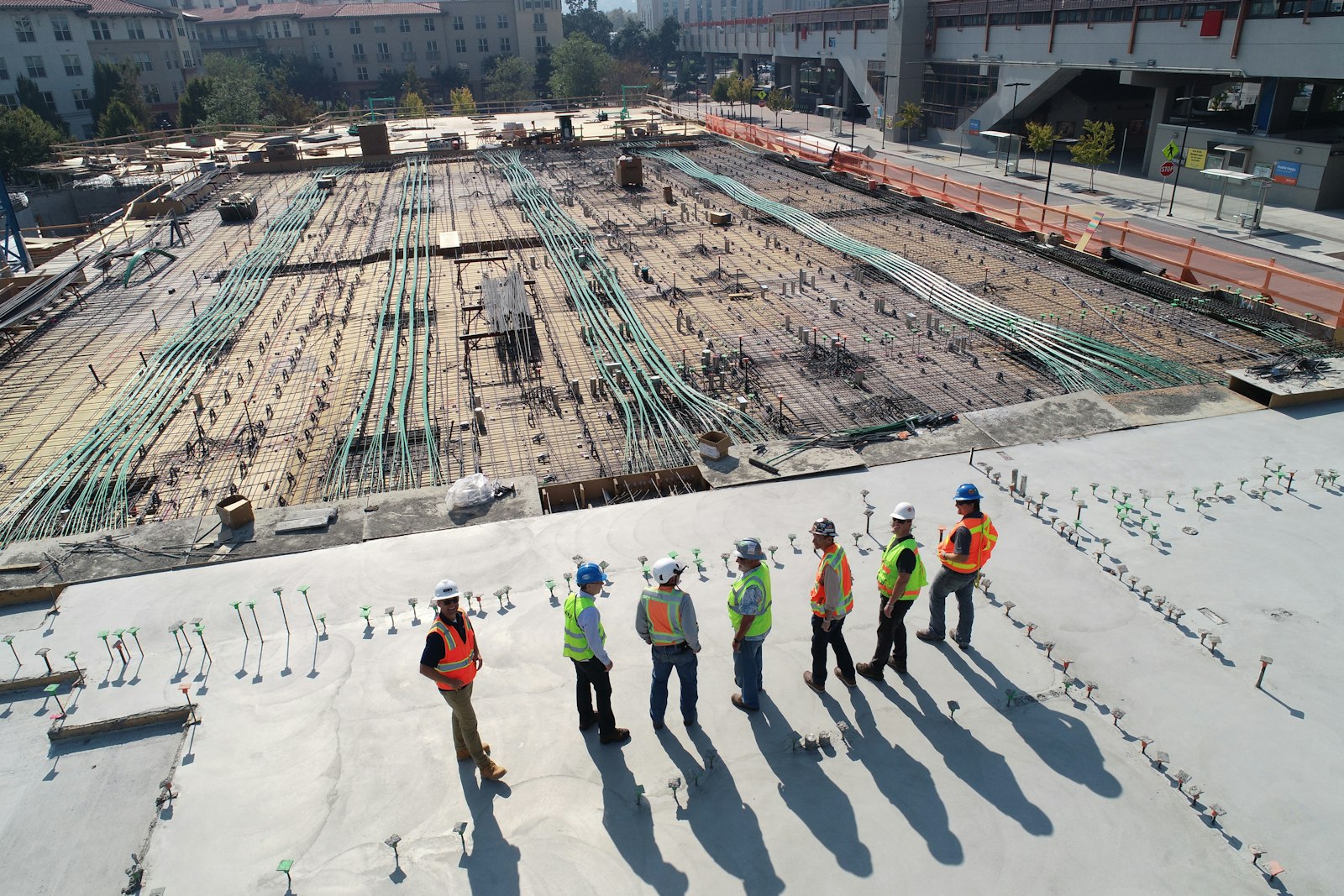
Every project has a lead architect who carries the thread. Around that person sits a small team: a designer, a technologist, sometimes a student. The team meets weekly, and anyone can raise a problem without waiting for a formal review.
Site visits are shared. The people who drew the detail go to see it built. That habit keeps drawings honest, because the person drawing knows they will stand in front of the result.
We also make time for the studio to look at work together. Reviews are not performances. They are working sessions where a colleague can point at a plan and say, plainly, that something does not work.
The same small group stays on a project from start to finish. This is the single practice decision that shapes everything else.
When a project changes hands, information is lost. A question that could be answered in two minutes becomes a week of email. A detail that was resolved early gets reopened because no one remembers why it was designed that way. Continuity removes that tax.
It also changes the relationship with the client. By the time construction starts, the architect and the client have usually been through enough decisions together to trust each other. That trust is worth more than any single drawing.
For a small studio, this is also a matter of pride. We want to see the building finished. We want to know it works. The work is not done when the drawings are issued, and everyone here understands that.
Whether you are a client with a project, a student looking for a placement, or an architect considering a move, we are glad to hear from you.
Start a conversation